

Hitler Joke on National TV in Poor Taste

asta-baukute

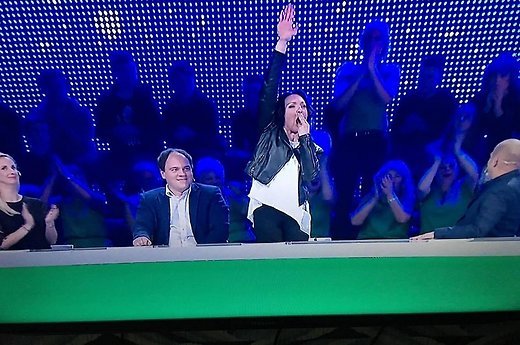
Baltic News Service reported Lithuanian Jewish Community chairwoman Faina Kukliansky responded after actress Asta Baukutė performed a gesture intended to imitate Adolf Hitler on a television program on Friday called Atspėk dainą [Name That Tune], saying the behavior was in poor taste.

“Since I haven’t looked into it, I can’t say that this is offensive, but my question would be, who needs to joke like that? There are a million other topics and perhaps this was a joke which failed. I don’t understand that kind of joke and likely others do not either, so a completely unfunny response is possible. In my understanding these sorts of things should be avoided generally. … Perhaps a little more talent and a deeper understanding is needed to pull this off, improvisation doesn’t really work. It’s even impolite and in poor taste,” Kukliansky was quoted as saying by BNS.

Friday Baukutė on the broadcast of Atspėk dainą guessed the tune by Simonas Donskovas, lept to her feet and apparently made gestures intended to imitate Hitler. The program was not live and was broadcast from material shot earlier.

Kukliansky, according to BNS, said she didn’t find Baukutė’s actions humorous and wondered why it was included in the final edit for the show.

“After seeing the initial information about, she acted very strangely. Or maybe I don’t have enough of a sense of humor, but it wasn’t funny to me at all. There might be a different subtext at work in the show which I didn’t get. I don’t understand in general why this is necessary. Aren’t there other topics? All the more since this was recorded, and perhaps there should be more caution exerted with respect to certain social groups, and more effort to make sure the program isn’t misinterpreted. Most likely Ms. Baukutė didn’t intend anything bad, she was probably making fun of Hitler, but she didn’t manage to pull it off completely successfully,” Kukliansky told BNS.simonas-donskovas2
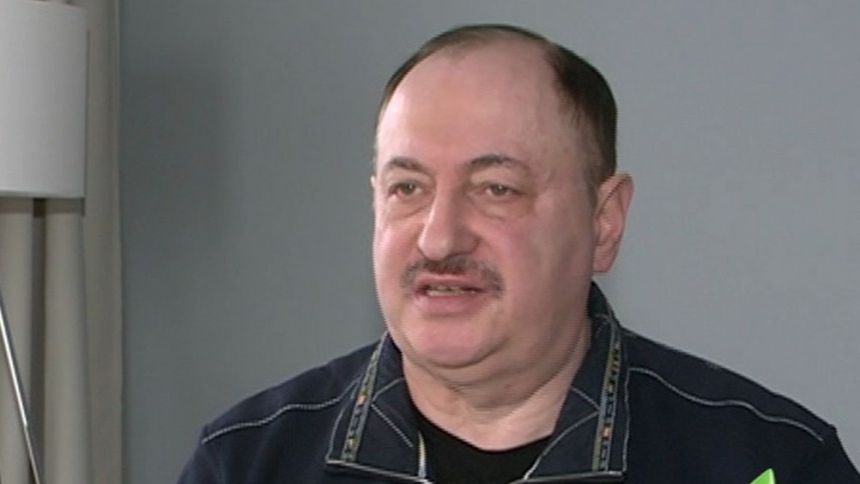
BNS was unable to reach Baukutė for comment. On Saturday she told the internet news site 15min.lt she was sorry about her behavior on the Lithuanian National Radio and Television program. “This is a normal democratic state. I think it’s allowed to make jokes. In our wonderful Lithuania these kinds of talented ethnicities may establish schools and perform in show business. This is a country which shouldn’t get hung up because of that gesture, I didn’t have that intention. There was no politics in my gesture at all. I think we can be happy that such things as Jew-baiting do not happen in Lithuania. If someone wants to create a conflict, which I certainly do not, and if someone perceived a bad subtext, I truly apologize,” the actress told the news site.


Lithuanian National Radio: Slobodka

lrtradijas

The Lithuanian National Radio and Television radio program Radijo dokumentika [Radio Documentary] for Sunday, January 8, rebroadcast Tuesday, January 10 after the morning news program at 9:00 A.M. The small area at the confluence of the Neris and Nemunas Rivers created by the Radziwiłłs in the 17th century, Slabada, a “serfdom-free zone,” was originally smaller and is called a village in the documentation, but by the second half of the 18th century the shtetl was a competitor in arts and crafts and trade with the city of Kaunas across the rivers. Industry developed quickly in the 20th century. Slobodka, as it came to be called, was the home to the world-famous Slobodka Yeshiva. Known in Lithuanian as Vilijampolė, the city on the Viliya River [a synonym for the Neris], the district became part of the city of Kaunas before World War II.

This is the eighth episode in a series dedicated to the Jewish shtetls of Lithuania in Lithuanian National Radio and Television’s retrospective on the forgotten past of the Jews of Lithuania.

Presidents of Lithuania and Israel on Holocaust and Business

VILNIUS, January 8, BNS–The presidents of Lithuania and Israel on Sunday underlined the importance of preserving the heritage of Lithuanian Jews and of expanding business ties as they marked 25 years since the establishment of diplomatic relations between the two countries.

“Everywhere you look, the ties between our two nations get deeper and stronger, the olive and oak, growing as one,” Dalia Grybauskaite and Reuven Rivlin said in a joint statement.

The two presidents underscored the need to ensure the Holocaust never happens again through remembrance and education.

“We have to commemorate the past by honoring the innocent victims and the righteous, by studying the perpetrators and collaborators as well as by building bilateral relations based on friendship and mutual respect,” they said.

Grybauskaite and Rivlin said: “There are numerous areas in which the relations between Lithuania and Israel are already quite strong and many more spheres in which the partnership could and will be expanded.”

Lithuania, Estonia, Latvia: We Aren’t Ex-Soviet Republics

VILNIUS, Jan 6, BNS – Ambassadors of the three Baltic states have asked the German media to stop referring to Lithuania, Latvia and Estonia as former Soviet republics.

The Lithuanian Foreign Ministry said the address had been inspired by the Soviet Legacy column on the German news portal Zeit Online. The Ministry reported the portal responded to the remark, pledging to stop using a concept which is inaccurate in terms of international law.

In the letter to the Germany portal, the ambassadors of Lithuania, Latvia and Estonia noted the Baltic states did not join the Soviet Union voluntarily but were occupied and annexed, while the majority of Western democracies, including Germany, never recognized the Soviet occupation of the Baltic states.

The letter also notes that the Baltic states did not create themselves from scratch in 1990s after the collapse of the Soviet Union but restored their independence that had been severed by the Soviet rule, thus declaring continuity of their statehood. Therefore, the Baltic states are not successor states of the Soviet Union and therefore cannot be defined as former Soviet republics.

BNS_logotipas


Lithuanian Political Illusions: The “Policy” of the Lithuanian Provisional Government and the Beginning of the Holocaust in Lithuania in 1941

The Lithuanian Jewish Community is publishing a series of articles by the historian Algimantas Kasparavičius, a senior researcher at the Lithuanian History Institute.

kasparavicius

Part 1

In Lithuanian historiography and in the public socio-cultural discourse, Lithuania’s greatest tragedy is often considered the Soviet occupation of 1940, which quickly turned into annexation and the loss of statehood. While not denying the historical significance of this catastrophe for modern Lithuanian statehood, considering the wider and deeper historical view, this is not entirely fair or moral historically. The greatest 20th century tragedy really came upon Lithuania not in June of 1940, when freedom and statehood was lost, but a year later when the Holocaust began in Nazi-occupied Lithuania. The greatest 20th-century tragedy for Lithuania is the destruction of the Jewish community which had lived for half of a millennium and had created a civic Lithuanian identity. Even the loss of national statehood is not an irreversible process, as shown by the experience of many peoples. When a nation loses statehood during critical historical circumstances, after the geopolitical situation changes for the better it is possible to restore it. That’s what Lithuania did as well on March 11, 1990. But the former Lithuanian Jewish Litvak community, rich in all senses, will never be restored, unfortunately. And that can only mean one thing, that our Lithuania, which for many Lithuanians still represents, as Dr. Jonas Basanavičius said, “the home of the people,” will remain diminished, darker, emptier, weaker and more fragile. In terms of civilization. Emotionally. Culturally. Demographically. Geopolitically.