The Sabbath begins at 8:37 P.M. on Friday, August 21, and concludes at 9:35 P.M. on Saturday in the Vilnius region. Sabbath candles should be lit at 8:19 P.M. and completed before sunset at 8:37 P.M.

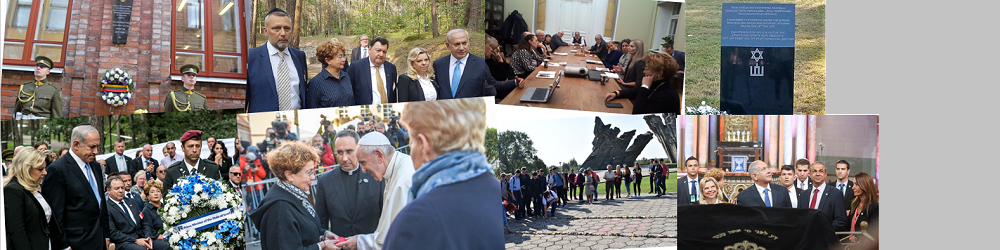
Israeli President Isaac Herzog Visits Lithuania


The Sabbath begins at 8:37 P.M. on Friday, August 21, and concludes at 9:35 P.M. on Saturday in the Vilnius region. Sabbath candles should be lit at 8:19 P.M. and completed before sunset at 8:37 P.M.

by Grant Gochin
A Lithuanian state institution took an American administrative record, hardened it into an exoneration and published the result as a verdict of the United States. It has defended that claim since 2018. On August 19, 2026, ninety-nine days after Lithuania’s Foreign Ministry told US Congress the wording had been corrected, the claim was still online in Lithuanian.
Everything that matters is in documents Lithuania itself has supplied.
What America Actually Decided
In 1974 the Immigration and Naturalization Service examined allegations concerning Juozas Ambrazevičius-Brazaitis, acting head of Lithuania’s 1941 Provisional Government, and interior minister Jonas Šlepetys. Commissioner Leonard Chapman reported that no information of an evidentiary nature had been elicited from the sources contacted; the names were removed from the active list and the investigations deactivated. He also said new meaningful information would reactivate the investigation.

by Grant Gochin
A Lithuanian university published the contradictory wartime record in 2005. The Centre was told, and kept publishing.
Vilnius University Press published the wartime record in 2005. Thomas Remeikis assembled the American Legation dispatches from Stockholm and the Lithuanian material carried inside them; the Institute of International Relations and Political Science at Vilnius University appears on the imprint, and the introduction is signed Chicago-Vilnius, 2004. 1 Twenty-one years later the Genocide and Resistance Research Centre of Lithuania cannot describe the Lithuanian material in those documents as Soviet, inaccessible, or newly discovered in a foreign archive. That matters now, because the Centre is the state body expected to supply historical authority in the prosecution of Artur Fridman, a Jewish citizen of Vilnius charged over a Facebook post. Its disclosure conduct in that case is set out in Show the File.
Publication establishes availability. It does not prove that a particular official at the Centre read this volume. The correspondence set out below establishes something different and harder: the Centre received direct documentary challenges to the historical claims it went on publishing, and answered them.

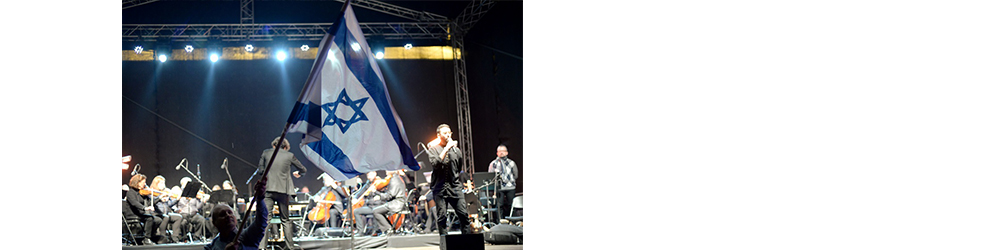
From September 13 to October 7 2026 the Lithuanian capital will host the third international Jewish music and culture festival, Vilnius Shalom Festival, one of the most significant events dedicated to Jewish music and culture in the Baltic region.
The festival’s nearly month-long programme will feature classical music, klezmer and jazz concerts, educational events, as well as the Shofar March – a unique symbolic procession of unity, peace and remembrance with no equivalent elsewhere in the region. Dedicated to the beginning of the Hebrew New Year, Rosh Hashanah, the Shofar March will bring together hundreds of participants from Lithuania and abroad for the third consecutive year.

by Grant Gochin
Eight days before Artur Fridman’s next hearing, Lithuania’s state history center should disclose the research behind any historical premise used against him.
The next hearing in the criminal case against Artur Fridman is scheduled for August 26. He is innocent, and the prosecution against him is illegitimate. Before the Vilnius City District Court hears more historical evidence, Lithuania should answer a simpler question: what research file, if any, supports the state history being carried into the case?
The prosecution began with a Facebook post. On May 9, 2024, Fridman stood at Antakalnis Cemetery in Vilnius to honor his grandfather Aron Fridman, a Jewish soldier who fought Nazi Germany in the Red Army. He wrote about Soviet victory, Lithuanian partisans, and Lithuania’s heroization of Adolfas Ramanauskas-Vanagas. Algirdas Ramanauskas filed a complaint with the Vilnius Regional Prosecutor’s Office on July 16, 2024. On January 8, 2025, authorities imposed a written undertaking restricting Fridman from leaving Lithuania. On October 30, 2025, prosecutor Kristina Minko signed charges in Criminal Case No. 02-2-00512-24 under Criminal Code Articles 170² §1 and 313 §2. The formal indictment runs twelve pages; the broader pre-trial file runs to roughly 220. The Vilnius City District Court opened the trial on March 5, 2026.
Emanuelis Moskovičius has died. He was born in 1947. He was an active member of the Lithuanian Jewish Community, a warm person and a good friend. Our deepest condolences to his family, friends and all who knew and loved him.
Violeta Palčinskaitė has passed away. She was born in 1943. Poet, playwright, writer and children”s author, her work inspired the entire Lithuanian cultural sphere during and after the Soviet occupation. She set the tone for future writers of Lithuanian children’s books, her plays inspired the creation of the Lėlė Theater and at least three films came from her writing. The Lithuanian Jewish Community expresses our deep condolences to her surviving family, friends and fans throughout the Community and the country.

The Sabbath begins at 8:53 P.M. on Friday, August 14, and concludes at 9:54 P.M. on Saturday in the Vilnius region. Sabbath candles should be lit at 8:35 P.M. and completed before sunset at 8:53 P.M. Wednesday, August 19, is Chinese Valentine’s Day or Qixi in China and Taiwan, on the 7th night of the 7th month on the Chinese lunar calendar.

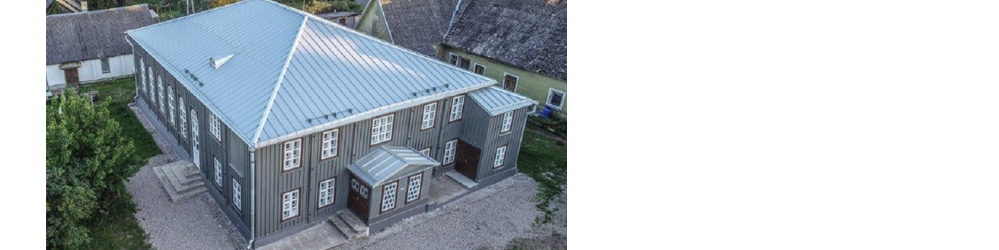
Sėla Museum director Edita Landsbergienė and museum staff held a Holocaust commemoration at the site of the former synagogue in Biržai/Birzh last week. Lithuanian Jewish Community chairwoman Faina Kukliansky, Panevėžys Jewish Community chairman Gennady Kofman, Israeli ambassador to Lithuania Shelly Hugler Livne, a representative from the city’s mayor’s office and others spoke at the event.
A procession walked from the city about 3 kilometers to the mass grave marked in Pakamponys Forest.
The commemorative ceremony and procession were followed by the premiere of an opera called Kitas Miestas [A Different City] at a local high school gymnasium about the pre-Holocaust Jewish community in Birzh and how they were murdered in the Holocaust. An internet stream of the opera will be made available here.

A plaque commemorating Litvak photographer Shimon Bajer (1893-1942) was unveiled Thursday on Freedom Alley, Kaunas’s main pedestrian walking mall, at his former residence at Laisvės alley no. 97 (formerly no. 58). Bajer was one of the most famous figures in Lithuanian photography in the period between the two world wars and pioneered studio photography in the country. He photographed Lithuanian president and later dictator Antanas Smetona and Lithuania’s chief rabbi Rozensen, among others. Shimon and his Raja were murdered in the Kaunas ghetto in 1942.

Photographs by Gediminas Pašvenskas courtesy the Kauno Diena newspaper and website.

A plaque commemorating Jewish photographer Shimon Bajer (aka Bayer) will be unveiled in Kaunas at 4:00 P.M. on Thursday, August 13, at his former residence at Laisvės alley no. 97 (formerly no. 58). The Kaunas Jewish Community invites the public to come remember this important Kaunas photographer from the interwar period. Bajer and his wife Raja were murdered in the Kaunas ghetto in 1942.
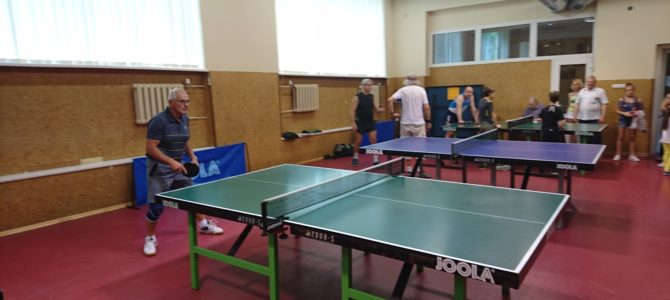
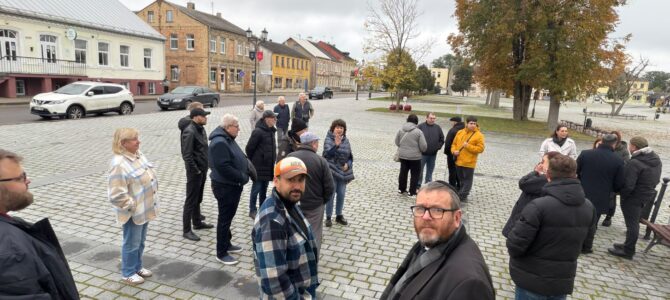
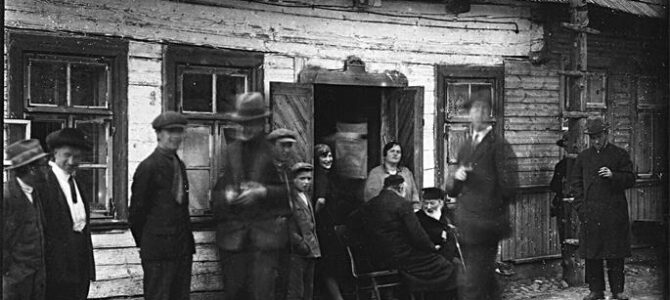
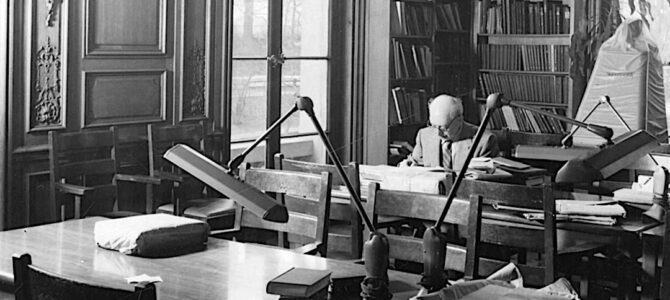
The Ukmergė Regional History Museum invites the public to the town of Želva in the Ukmergė (Vilkomir) region at 11:00 A.M. on August 11 to celebrate the 100th anniversary of the birth of Aaron Klug, who won the Nobel prize for chemistry. Želva is the Klug family hearth. At the age of two Aaron Klug and the rest of his family immigrated to the Union of South Africa. While he later said he remembered almost nothing about Lithuania, he often expressed pride in his Litvak roots and did related family stories from Želva. His grandfather on his father’s side was a cattle merchant. In 1982 Klug was awarded the Nobel prize for chemistry for his work on biological macro-molecular structures. Queen Elizabeth II knighted him in 1988.
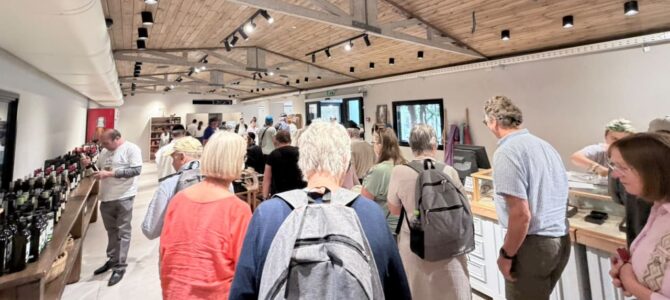
The names of 1,225 people buried at the desecrated Jewish cemetery in Klaipėda were read out at a ceremony held in the first week of August called “Voices of the Departed.” A symbolic headstone was also erected there in their honor.
Master of ceremonies Nerijus Gedminas said: “This was the Klaipėda Jewish cemetery and ritual funeral home right up until World War II. The Klaipėda Jewish community was annihilated during the Nazi occupation and its material legacy was largely destroyed as well. The post-war Soviet government set up a secret radio jamming station in the former [sic] cemetery called No. 61. Jewish headstones were used as construction material and for the bases of the antennae.”
Klaipėda Jewish Community chairman Feliksas Puzemskis said: “On the eve of Klaipėda’s birthday we want to give the city a list of the people who built this city and who are buried in this cemetery. Many visitors from around the world come here looking for their roots. Until now there hasn’t been a database for visitors to check whether their relatives are buried here. To accomplish this, organizers and money were required, but more importantly, the right person to undertake this work. We were very fortunate that Klaipėda University invited in professor Ruth Leiserowitz, thanks to whom this list has been reconstructed. She compiled a priceless treasure house of information.”

Šiauliai Jewish Community members toured Radviliškis and Šeduva August 1, where they learned about the former Jewish communities there and visited sites of former Jewish life, including the former People’s Bank site in Šeduva, Jewish neighborhoods and streets, mikvot and several synagogues.

The Sabbath begins at 9:08 P.M. on Friday, August 7, and concludes at 10:12 P.M. on Saturday in the Vilnius region. Sabbath candles should be lit at 8:50 P.M. and completed before sunset at 9:08 P.M.

The Panevėžys Jewish Community received visitors from France: Mr. Matt Nguyen and his mother. The warm meeting with Community members was more than just a search for roots, it was a return to the place where their family called home more than a century ago.
Nguyen’s father was Maurice Hendel, aka Moshe Lozer Gendel, who immigrated from Panevėžys to the United States in 1922, although the family hearth isn’t Panevėžys but Pastovys now in Belarus (Postavi). Following the path of Rabbi Yosef Shlomo Kahaheman, the Hendel family moves to Panevėžys during the First World War. Moshe’s future wife Rochel Lea Tuvman moved later from Vidžiai, Lithuania, to Panevėžys. They built a family together in Panevėžys, traces of which remain to this day.
Moshe died at the Panevėžys Jewish Hospital in 1938 and was buried in the city’s Jewish cemetery. The cemetery was destroyed during Soviet times to build a city park. Moshe’s mother, sister and daughter-in-law remained in Panevėžys during the Holocaust and were murdered there.

by Grant Gochin, August 4, 2026
Since 2015 I have filed forty-nine formal submissions with Lithuanian state bodies. Eight lawsuits and international filings. Eleven to the Genocide and Resistance Research Centre. Five criminal complaints under Article 170-2. Eleven institutional submissions. Two to the Commission of Journalist Ethics. Twelve letters. Not one produced a finding on the merits.
Lithuania’s answer has been consistent. I am a foreigner with a grievance. The controversy is manufactured. In February 2025 Laurynas Kasčiūnas–member of the Seimas, former Minister of National Defence, newly elected chairman of the Homeland Union–called me a Russian agent and called me trash.
That answer rests on a premise: that the file begins with me.
It begins in Paris on December 30, 1921, in a letter signed by Leo Motzkin.
I know that because of a book almost nobody reads. In July I borrowed it through interlibrary loan from Duquesne University. Herbert von Truhart, Völkerbund und Minderheiten-Petitionen, Vienna and Leipzig, 1931. I could locate no openly accessible full-text scan. To consult the complete inventory you borrow the physical volume.
Svetlana Karaulova has died. She was born in 1942. She was a member of the Lithuanian Jewish Community and a client of the Saul Kagan Welfare Center. Our deepest condolences to her daughter and other friends and family members.

The Palanga Jewish Community is pleased to announce a guided tour of the traces of Jewish life in Palanga. The tour starts at 4:00 P.M. on Friday, August 7, at the main entrance to Birutė Park, by the gates, Vytauto street no. 19. The walking tour will proceed from there through the city and end up at the city square and the plaque commemorating the former synagogues there. The tour is free and open to the public, but registration is necessary. Please indicate the number of people in your party while registering by sending an email to palangoszb@gmail.com or by calling+370 682 55164.

Members of the Lithuanian Roma community gathered August 3 at the Ponar Memorial Complex to remember their compatriots murdered during the Holocaust. According to EU reports, 1 in 3 Roma still experience discrimination in EU member-states. Approximately 500 to 1,000 Roma were murdered at Ponar along with the largest mass murder of Jews in Lithuania and a number of Poles, Soviet POWs and Lithuanian anti-Nazi dissidents.